


How to Lower Heating Bills at Home
When the heating is on for longer, even a small amount of wasted energy can soon show up on your gas bill. A home that feels chilly despite the radiators being hot, a boiler that keeps cycling on and off, or heating controls that never seem quite right can all cost more than they should.
Knowing how to lower heating bills is not about sitting in a cold house or switching the heating off completely. It is about making sure your boiler, radiators and controls work together efficiently, while keeping warmth inside the rooms where you need it.
Start with your heating controls
Heating controls are one of the simplest places to make savings, yet many households use them in a way that wastes heat. If your thermostat is set higher than necessary, your boiler will continue working until the whole house reaches that temperature - including rooms you may barely use.
Most households are comfortable at around 18-21°C, although the right setting depends on your home, your family and health needs. Try reducing the thermostat by one degree and see how it feels over a few days. A modest adjustment can make a meaningful difference across a full heating season.
Set your programmer so the heating comes on when you need it, rather than running for hours in an empty home. If your routine changes from day to day, smart controls can be useful, but they are not essential. A well-programmed timer and room thermostat can still do an excellent job.
Do not turn the thermostat up to heat a room faster
A thermostat sets the target temperature. Turning it from 20°C to 25°C will not make the radiators warm up more quickly. It simply tells the boiler to run for longer, which can lead to overheating and higher bills.
If certain rooms are always too hot or too cold, the issue may be radiator balancing, thermostatic radiator valves, poor insulation or a heating system that needs attention. It is usually better to identify the cause than keep adjusting the main thermostat.
Make every radiator count
Radiators cannot heat a room properly if furniture, heavy curtains or radiator covers block the flow of warm air. Leave space around them where possible, and make sure curtains do not hang over the radiator and trap heat against the window.
Bleeding radiators is another straightforward check. If a radiator is cold at the top but warm at the bottom, air may be trapped inside. With the heating switched off and the system cool, bleed it carefully using a radiator key and have a cloth ready for any water. If radiators regularly need bleeding, or pressure keeps dropping, arrange for a qualified engineer to investigate rather than repeatedly topping up the system.
Thermostatic radiator valves, often called TRVs, can help you heat rooms according to how they are used. For example, bedrooms may not need the same temperature as a living room in the evening. Avoid turning every TRV to maximum by default. Set them to a sensible level and make gradual changes until each room feels comfortable.
A cold radiator, uneven heat, banging pipes or dirty water in the system can indicate circulation problems. A professional powerflush is not automatically needed for every home, but it may be worthwhile where sludge is affecting radiator performance. An engineer can assess the condition of the system and recommend the right solution.
Keep warmth inside the house
The cheapest heat is the heat you do not lose. Before considering major upgrades, deal with the easy areas where warm air escapes and cold air enters.
Check for draughts around external doors, letterboxes, loft hatches, pipe entry points and older windows. Draught-proofing can make rooms feel more comfortable without increasing the thermostat setting. Close curtains at dusk, especially in rooms with larger windows, but keep them clear of radiators.
Loft insulation is often one of the most effective improvements for homes that have little or uneven coverage. Wall insulation and replacement glazing can also reduce heat loss, although these are larger investments and may not suit every property. Older homes, listed buildings and properties with solid walls need more careful consideration, so it is worth getting advice before committing to work.
Use internal doors sensibly. Keeping doors closed can help retain warmth in occupied rooms, particularly if you are heating a smaller part of the home. However, do not block fixed ventilation grilles or air bricks. Your property needs adequate ventilation to manage moisture and maintain safe appliance operation.
Use your boiler efficiently, not harder
Your boiler is the heart of your heating system. When it is working efficiently, it should provide dependable warmth without unnecessary fuel use, strange noises or frequent pressure problems.
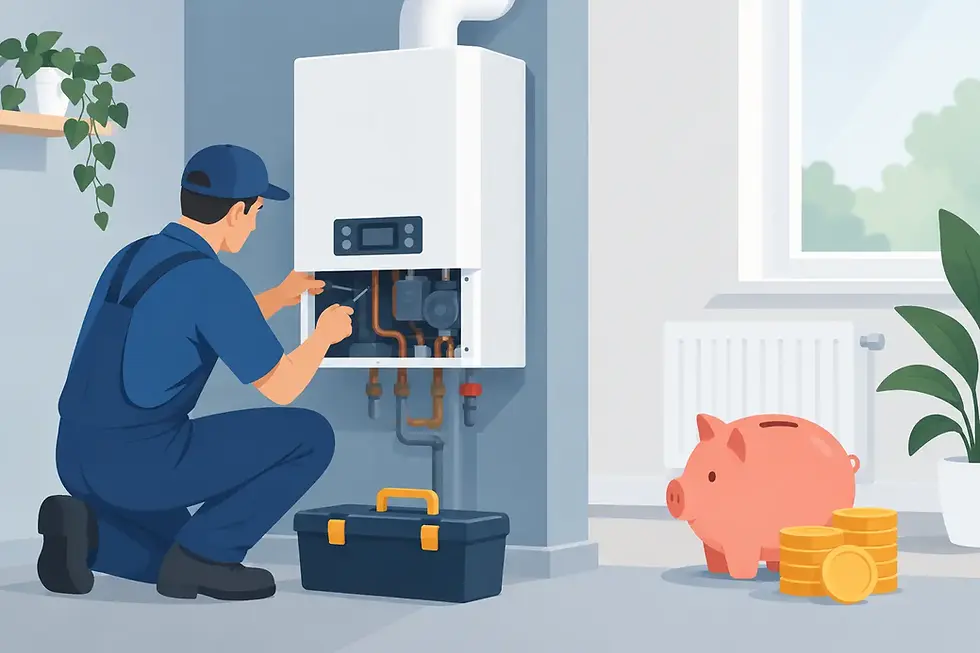
An annual boiler service is a sensible starting point. Servicing helps a Gas Safe registered engineer check that the boiler is operating safely, identify worn parts early and spot faults that may be affecting efficiency. It can also be required to maintain some manufacturer warranties.
If you have a modern condensing boiler, the flow temperature setting can affect efficiency. In many homes, lowering the central heating flow temperature allows the boiler to condense more effectively and use less gas. However, it must still be high enough to warm the house properly, especially during colder weather. The right setting depends on the boiler, radiators, insulation and household needs, so there is no single figure that suits every property.
Do not alter internal boiler settings if you are unsure what they control. A qualified heating engineer can explain your options in plain language and make suitable adjustments safely.
Know when an older boiler is costing you more
A boiler does not have to be completely broken to become expensive to run. If it is more than 10-15 years old, needs regular repairs, makes unusual noises or struggles to heat the home evenly, replacement may be worth considering.
A new boiler is a bigger upfront cost, so replacement is not always the immediate answer. A reliable, well-maintained boiler may have plenty of life left. But if repair bills are mounting and efficiency is poor, a modern boiler with properly matched controls can offer better reliability, lower running costs and a longer manufacturer warranty.
For homeowners in Southend-on-Sea and the surrounding area, a local Gas Safe registered engineer can assess the whole system, not just the boiler. Correct boiler sizing, radiator condition, hot water demand and controls all matter. An oversized or poorly fitted boiler will not deliver the savings you expect.
Change a few everyday habits
Small habits will not fix an inefficient boiler or a draughty property, but they can reduce wasted energy. Heat the rooms you use rather than trying to keep every room at the same temperature all day. Put on an extra layer before increasing the thermostat, and use throws in the evening if that keeps you comfortable.
For hot water, avoid leaving the immersion heater on unnecessarily if it is a backup rather than your main source of hot water. Repair dripping hot taps and leaking pipes promptly. They may seem minor, but wasted hot water means wasted energy as well as water.
It is also worth checking your energy bills regularly. An unexpected increase can be caused by price changes, but it can also reveal a change in how much gas the household is using. Compare similar periods where possible, allowing for colder weather and changes in occupancy.
When to call a heating engineer
Some heating issues need professional attention rather than another adjustment to the controls. Arrange an inspection if your boiler loses pressure repeatedly, radiators stay cold after bleeding, hot water is unreliable, the boiler displays fault codes, or you notice unusual smells, leaks or black marks around an appliance.
If you smell gas, suspect carbon monoxide or a carbon monoxide alarm sounds, switch off the appliance if it is safe to do so, open doors and windows, leave the property and seek urgent advice from the relevant emergency service. Never attempt gas work yourself.
Lower bills usually come from a series of sensible improvements rather than one dramatic change. Start with the controls you already have, keep the system maintained, and deal with faults before they become costly breakdowns. A warm, well-run home should feel like peace of mind, not a monthly worry.


Comments