

Combi vs System Boiler: Which Suits You?
If your boiler is ageing, unreliable or costing more to run than it should, the combi vs system boiler question matters more than most homeowners expect. The right choice affects not just your heating bills, but also how quickly you get hot water, how much space the system takes up, and how well your home copes with busy mornings.
For some households, a combi is the obvious fit. For others, a system boiler avoids daily frustrations that only show up once everyone is trying to shower at the same time. The best option depends on your home, your water demand and what you want from the system over the next ten years, not just the cheapest quote on installation day.
Combi vs system boiler: the basic difference
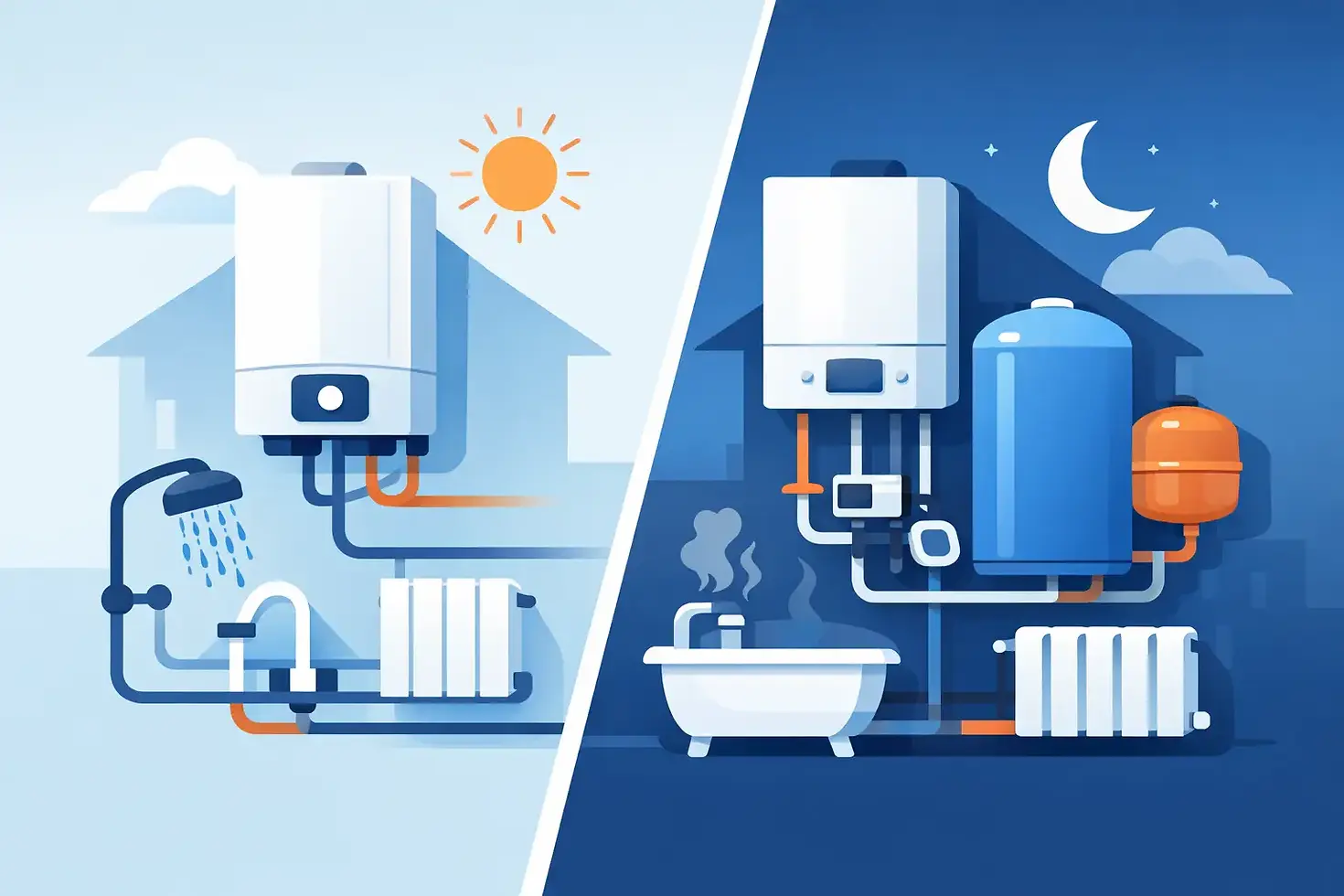
A combi boiler heats water on demand. It does not usually need a hot water cylinder because it takes water directly from the mains and heats it as you use it. That makes it compact and popular in smaller homes where space matters.
A system boiler also heats your radiators directly, but it works with a separate hot water cylinder to store hot water for later use. Many of the main heating components are built into the boiler itself, which keeps the overall setup neater than older regular boiler systems, but you still need room for the cylinder.
That one difference changes how each system performs in day-to-day life. A combi gives you hot water without waiting for a tank to reheat. A system boiler is better suited to homes where several people may need hot water in a short period.
When a combi boiler makes sense
Combi boilers are often the best choice for flats, smaller houses and households with lower to moderate hot water demand. If you have one bathroom and you are not regularly running a shower while someone else fills a bath or uses hot water at the kitchen tap, a combi can work very well.
The biggest appeal is convenience. There is no cylinder taking up airing cupboard space, and no need to heat a stored tank of water that might not all be used. That can make combis efficient in the right property, especially for households that want to keep energy waste down.
They also suit homes where space is limited. If you are replacing an older boiler and want a cleaner, simpler setup, a combi often helps free up useful storage space.
That said, there are trade-offs. Because a combi heats water as it is needed, the flow rate can become a limitation if several outlets are used together. In a busy family home, that can mean one person gets a weaker shower when another tap is turned on.
When a system boiler is the better fit
A system boiler usually suits larger homes, properties with more than one bathroom, and households with higher hot water demand. If several people live in the property and morning routines overlap, stored hot water can make a noticeable difference.
With a hot water cylinder, the home can supply multiple outlets more comfortably than many combi setups. If one person is showering and another is using the sink or another bathroom, a system boiler is generally better equipped to cope.
It can also be a sensible choice where water pressure from the mains is not ideal for a combi-led approach, although this needs proper assessment. Every property is different, and the existing pipework, cylinder location and incoming mains supply all play a part.
The compromise is space. You need room for the cylinder, and once the stored hot water has been used, it must reheat before the full supply is available again. For many families, that is still a worthwhile trade if it means better performance at peak times.
Combi vs system boiler for running costs
Homeowners often assume one type is always cheaper to run, but it is not quite that simple. A combi can be economical because it only heats water when required. There is no standing heat loss from a cylinder, which can help reduce waste.
A system boiler, however, can still be efficient, particularly when paired with a modern, well-insulated cylinder and sensible heating controls. In a larger home with higher usage, it may actually feel more efficient in practical terms because it delivers hot water more consistently and with less strain during busy periods.
The real cost difference often comes down to suitability. An undersized or poorly matched boiler of either type can lead to disappointment, higher bills and more wear on the system. Choosing the right setup for the property matters more than chasing a simple rule about which is cheaper.
Space, installation and future plans
If cupboard space is tight, a combi boiler has a clear advantage. Removing the need for a cylinder can free up room in smaller homes, loft conversions or properties where storage is already stretched.
A system boiler asks for more space, but it can offer more flexibility if your household may grow or your usage may change. If you are planning an extra bathroom, for example, it is worth thinking beyond your current setup. What works for two people in the house may feel very different later on.
Installation costs vary depending on what is already in place. Swapping like for like is usually more straightforward than converting from one system type to another. If a home already has a cylinder and pipework suited to a system boiler, keeping a similar arrangement may make practical and financial sense. If the property is better suited to a combi, the savings in space and simplification may justify the change.
Which boiler is better for water pressure?
This is one of the most misunderstood parts of the combi vs system boiler decision. A combi relies heavily on the incoming mains water pressure and flow rate. If these are poor, the performance of showers and taps may be disappointing no matter how good the boiler itself is.
A system boiler can sometimes offer a better overall experience in homes with higher demand, especially when the whole design has been planned properly. But it is not a magic fix on its own. Good results depend on the wider system, not just the boiler badge.
That is why a proper home assessment matters. Looking at bathroom numbers, occupancy, existing pipework and water pressure gives a far clearer answer than choosing a boiler type based on general advice alone.
How to decide between a combi and system boiler
A simple way to think about it is this. If your home is smaller, you have one bathroom, and you want a compact, efficient setup with hot water on demand, a combi is often the right answer.
If your home has more than one bathroom, your household uses a lot of hot water, or you want stronger support for busy periods, a system boiler is usually worth serious consideration.
It also helps to think about your daily routine rather than just the size of the house. A two-bedroom property with four occupants can place more demand on a boiler than a larger home with only one or two people in it.
For homeowners in places such as Southend on Sea or Westcliff on Sea, where many properties range from compact family homes to larger period houses, there is no one-size-fits-all answer. The right boiler is the one that matches the property and the people living in it.
The most common mistake homeowners make
The biggest mistake is choosing based on headline price alone. A cheaper installation can become expensive if the system struggles with daily demand or leaves you planning changes a few years later.
The second mistake is overcomplicating the decision. You do not need to become a heating engineer to make the right call. What you do need is clear advice from a qualified installer who will look at how your home actually works, explain the trade-offs properly and recommend a system that is built to last.
A good boiler should make life easier. It should heat the home reliably, provide the hot water you need and do its job without constant worry. If you are weighing up a combi against a system boiler, the best choice is usually the one that fits your home comfortably now and still feels right when your routine changes later.


Comments